Blog
3000K vs 4000K LED Light: How to Choose the Perfect Color Temperature for Your Space

Introduction
You’ve picked out the perfect light fixture, but now you’re staring at a box with a number that reads "3000K" or "4000K." Which one is right for you?
Choosing the color temperature of your LED lighting is one of the most critical decisions in interior design. Pick the wrong one, and your cozy living room might feel like a sterile hospital, or your modern kitchen might feel too dim and yellow.
Today, we are settling the debate: 3000K vs 4000K. We’ll explore the science behind color temperature, show you visual comparisons, and explain exactly where to use each one to make your space look its best.
What is Color Temperature?
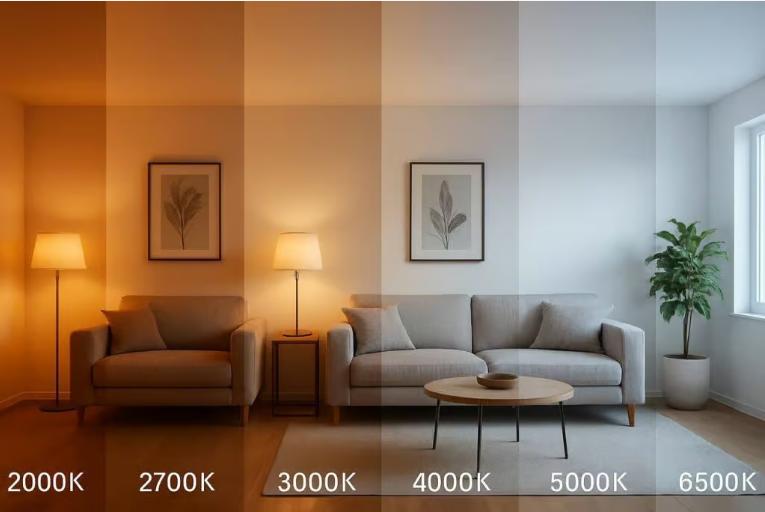
Before we compare, let’s quickly define the "K" (Kelvin). Color temperature measures the hue of a light source, ranging from warm (orange/yellow) to cool (blue/white).
Lower Kelvin (2700K–3000K): Soft, warm, yellowish light.
Higher Kelvin (3500K–4100K): Neutral, crisp, clean white light.
Very High Kelvin (5000K+): Daylight/Cool, blue-ish white light.
Understanding this spectrum is key to setting the mood and functionality of your room.
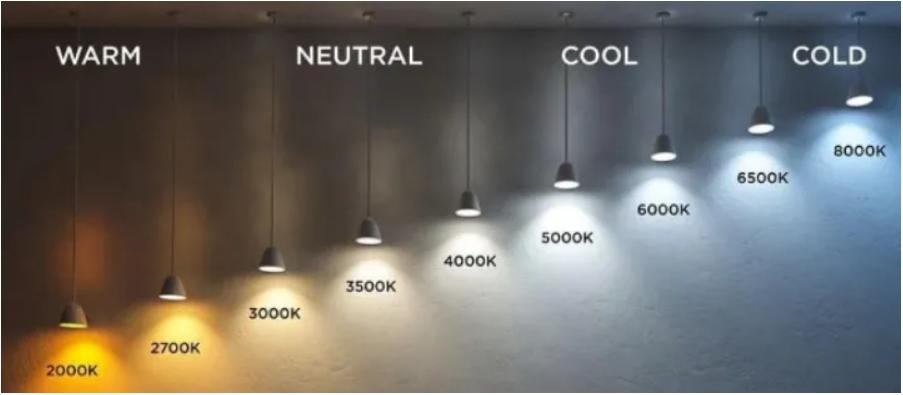
The Contenders: A Visual Breakdown
Let’s dive into the specific characteristics of each temperature.
3000K: Warm White
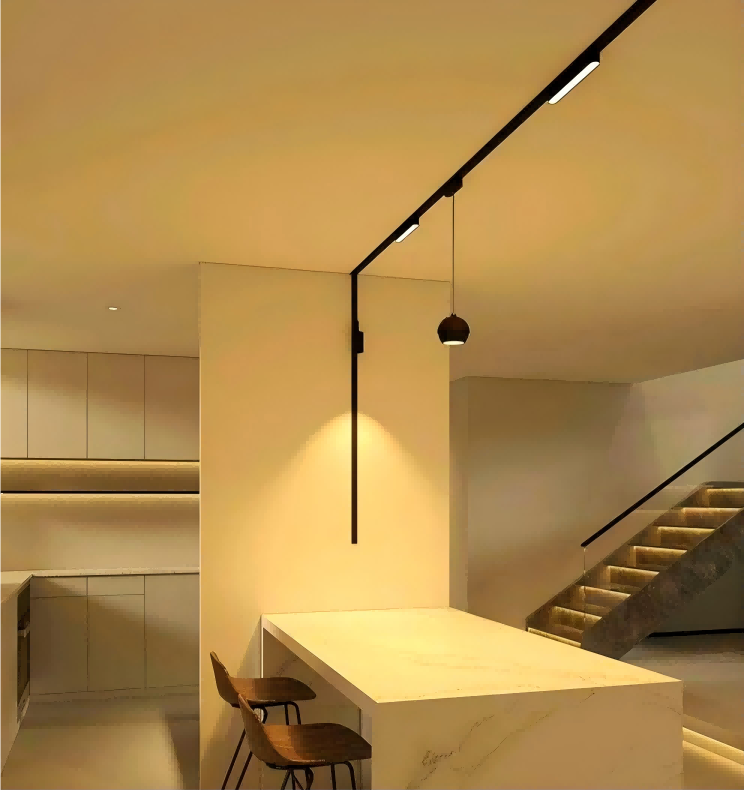
3000K is often called "Warm White." It is the standard for residential homes because it mimics the glow of incandescent bulbs (which were typically 2700K-3000K).
Appearance: Soft, yellowish, inviting.
Mood: Relaxing, intimate, comfortable.
Best For:
Living rooms and family rooms
Bedrooms
Dining rooms (makes food look appetizing)
Wood tones and earth-toned interiors
4000K: Cool White / Neutral White
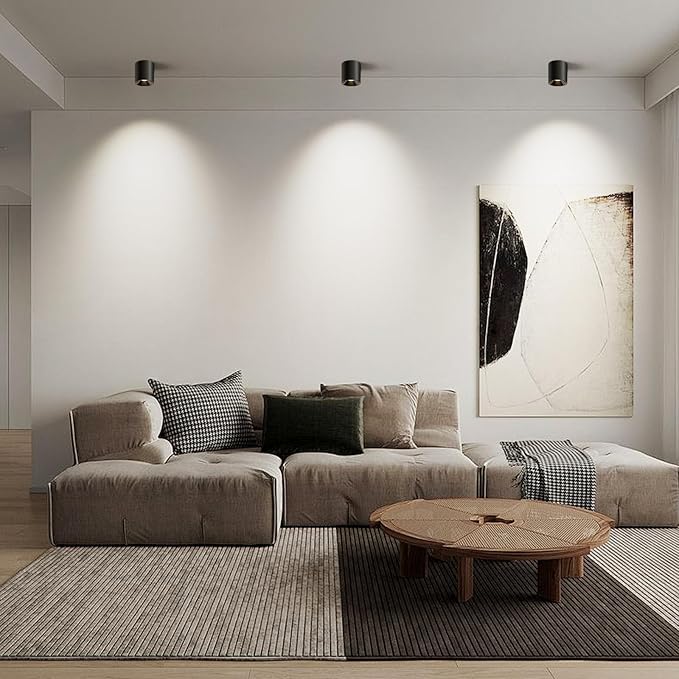
4000K falls into the "Neutral" or "Cool White" category. It contains less yellow and a hint of blue, offering a vibrant, alert feeling without the harsh blue of daylight (5000K+).
Appearance: Crisp, clean, bright.
Mood: Energetic, focused, alert.
Best For:
Kitchens (especially with white/gray cabinets)
Bathrooms (great for applying makeup)
Home offices and garages
Basements and laundry rooms
Side-by-Side Comparison: 3000K vs 4000K
To help you visualize the difference, here is how they stack up against each other in key areas.
| Feature | 3000K (Warm White) | 4000K (Cool White) |
|---|---|---|
| Color Hue | Soft yellow / Amber | Crisp white / Slight blue |
| Atmosphere | Cozy, relaxed, romantic | Energetic, clean, professional |
| Skin Tones | Flattering, softens features | Accurate, highlights detail |
| Cabinetry | Best with wood, cherry, oak | Best with white, gray, modern |
| Eye Strain | Low strain (relaxation) | High visibility (task focus) |
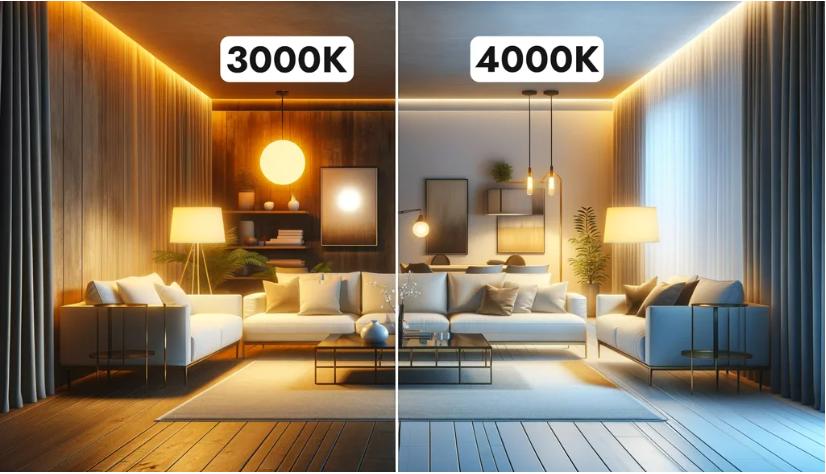
Watch: 3000K vs 4000K LED Lighting
Sometimes, photos don’t do it justice. Seeing the light in action—how it reflects off surfaces and changes the mood of a room—is the best way to decide.
Check out this detailed video guide where we walk through each room of the house to show you exactly how these temperatures perform.
How to Choose: A Room-by-Room Guide
Still unsure? Use this simple flowchart to decide:
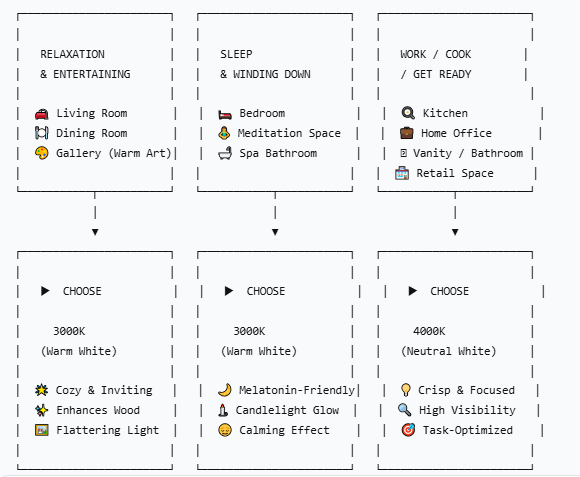
Choose 3000K if:
You have a lot of wood: 3000K magnetic track lights enhances the warmth of hardwood floors, oak cabinets, and wooden furniture. 4000K can make wood look dull or muddy.
It’s a "winding down" space: Bedrooms and living rooms benefit from the melatonin-friendly warm glow that signals your brain to relax.
You want a classic look: If your home style is traditional, craftsman, or rustic, 3000K magnetic track lights feels more authentic.
Choose 4000K if:
It’s a task-oriented space: In the kitchen (cutting vegetables), bathroom (shaving/makeup), or office (reading documents), 4000K provides the clarity needed to see fine details.
You have a modern or minimalist home: White walls, concrete, and stainless steel look sleek and high-end under 4000K.
You struggle with eye strain: If you read or work in a space, 4000K offers higher contrast than 3000K, which can reduce squinting.
The "Open Concept" Dilemma
One of the biggest mistakes homeowners make is mixing color temperatures in an open floor plan.
If your kitchen, dining room, and living room are all connected, you must choose one color temperature for the main lighting.
Scenario: If you use 3000K in the living room and 4000K in the kitchen, your eye will constantly detect the color clash. It will look disjointed.
The Fix: If you want the cozy vibe of 3000K but need task lighting in the kitchen, install 4000K under-cabinet task lights and keep the overhead recessed lights at 3000K. This allows for functionality without clashing primary light sources.
Conclusion
There is no "right" or "wrong" between 3000K and 4000K—only what is right for your space.
Go with 3000K if you want a cozy, relaxed, and inviting atmosphere.
Go with 4000K if you need clarity, focus, and a clean, modern aesthetic.
Still have questions about your specific project? Drop a comment below or subscribe to our channel for more lighting guides!
FAQ Section
Q: Is 4000K too blue for a living room?
A: For most people, yes. 4000K can feel clinical in a space meant for relaxation. However, if your living room doubles as a workspace or has a very modern gray/white palette, it can work well.
Q: Can I use 3000K in a bathroom?
A: Yes, but it is usually better for the primary bathroom if you want a spa-like feel. For a powder room or vanity where makeup application is frequent, 4000K is often preferred because it gives a truer reflection of colors.
Q: Is 4000K brighter than 3000K?
A: Not necessarily. Brightness is measured in Lumens, not Kelvins. However, 4000K appears brighter to the human eye because the cooler white light is perceived as more intense than the softer yellow light of 3000K.
Author introduction

Author
G'day My friends,
My name is Royce O'young, I’m the sales manager of Oleder Lighting. I have been in the LED lights industry for more than 16 years. Good at lighting design, track light & street light system configuration, and bidding technology support,and architecture inner decorating lighting advice . Feel free to contact us.I’m happy to provide you with the best service and products.
Email: r.oyoung@oleder-lighting.com | Wechat/WhatsApp: +86159 2057 0517.
Recommended Products


CATEGORIES
CONTACT US
Contact: Royce O'young
Phone: 15920570517
Tel: 0086-20-37716973
Email: r.oyoung@oleder-lighting.com
Add: Room 335,#1 Xianke 1st Rd, Honglitronic Group,Huadu ,510890, Guangzhou,P.R.C.
 Send Email
 Royce O'young
 Sales
Sales WhatsApp