Blog
How to calculate LED Lifetime ? TM-21 vs TM-28 telling you



When an LED lighting manufacturer claims 50,000 hours, 80,000 hours, or 100,000 hours of lifetime, what does that number actually mean?
For B2B lighting buyers, distributors, electrical contractors, and lighting designers, it is important to understand that LED lifetime is not simply the number of hours an LED remains switched on. In many cases, the industry uses lumen maintenance, especially the L70 value, to describe how long a light source is expected to maintain a certain percentage of its initial light output.
Two important IES methods are often mentioned together:
IES LM-80 – measures lumen maintenance of LED packages, arrays, or modules.
IES TM-21 – projects long-term lumen maintenance of LED light sources using LM-80 test data.
IES TM-28 – provides methods for projecting long-term luminous flux maintenance of LED lamps and luminaires.
The current IES documents include TM-21-21 and TM-28-20.
1. What Does LED Lifetime Really Mean?
An LED does not normally suddenly stop producing light at its rated lifetime.
Instead, the light output gradually decreases over time.
For example, imagine an LED luminaire starts with:
10,000 lumens
After long-term operation, it may gradually decline:
| Operating Time | Approx. Light Output |
|---|---|
| 0 hours | 100% |
| 10,000 hours | 90–95% |
| 30,000 hours | 80–90% |
| 50,000 hours | 75–85% |
| L70 point | 70% |
The exact curve depends on the LED technology, operating temperature, drive current, materials, optical system, and other factors.
The IES describes rated flux-maintenance life as the operating time over which an LED light source maintains a specified percentage of its initial light output.
What is L70?
L70 means the estimated operating time until the light output reaches 70% of its initial value.
For example:
Initial output = 10,000 lm
L70 = 60,000 hours
Expected output at 60,000 hours ≈ 7,000 lm
This does not mean that the lamp suddenly fails at 60,000 hours.
It means that, according to the applicable lumen-maintenance projection, the light output has reached the selected 70% threshold.
2. How Is L70 Calculated?
A simplified lumen-maintenance model can be expressed as:
Φ(t) = B × e⁻ᵅᵗ
Where:
Φ(t) = luminous flux at time t
B = initial model constant
α = lumen depreciation rate
t = operating time
The L70 point is obtained when:
Φ(t) / Φ₀ = 0.70
The IES discusses this exponential modeling approach for lumen-maintenance projections.
However, manufacturers do not normally determine a credible 50,000- or 60,000-hour lifetime simply by running an LED continuously for that entire period.
Instead, they use accelerated or long-duration testing plus statistical modeling and extrapolation.
That is where LM-80 and TM-21 become important.
3. LM-80: Where the Lifetime Data Starts


LM-80 is a measurement method, not a lifetime prediction method.
It evaluates the lumen maintenance and color maintenance characteristics of LED packages, arrays, or modules under specified test conditions.
Typical testing involves operating LED samples at controlled:
Temperature
Drive current
Operating conditions
Measurement intervals
The resulting data shows how the LED's light output changes over time.
For example:
0 h → 1,000 h → 2,000 h → 3,000 h → 6,000 h → 10,000 h
The collected data can then be used by TM-21 to project longer-term lumen maintenance.
The IES specifically describes TM-21 as a method for projecting flux maintenance using data obtained from LM-80 testing. (IES Store)
4. TM-21: Projecting LED Light-Source Lifetime


TM-21 is essentially the bridge between measured LM-80 data and a projected LED lumen-maintenance lifetime.
The simplified process is:
LED sample → LM-80 testing → measured lumen-maintenance data → TM-21 statistical projection → L70/L80/L90
For example:
LM-80 test data
↓
Analyze lumen depreciation
↓
Apply TM-21 projection method
↓
Calculate projected lumen maintenance
↓
Report an L70/L80/L90 value
The important 6× rule
One of the most important points for lighting buyers is the TM-21 extrapolation limitation.
IES guidance states that TM-21 projections should not exceed six times the duration of the LM-80 dataset used for the projection.
For example:
| LM-80 Data | Maximum TM-21 Projection |
|---|---|
| 6,000 hours | 36,000 hours |
| 8,000 hours | 48,000 hours |
| 10,000 hours | 60,000 hours |
So if a manufacturer has only 10,000 hours of applicable LM-80 data, simply claiming that TM-21 proves 100,000-hour L70 would not comply with this 6× projection limitation.
IES explicitly warns against marketing claims that exceed the TM-21 6× extrapolation limit.
5. TM-28: What Is Different?
This is where many lighting buyers become confused.
TM-21 focuses on LED light sources.
TM-28 focuses on LED lamps and luminaires.
The IES TM-28-20 document provides procedures for long-term luminous-flux-maintenance projection for LED lamps and luminaires. It includes both a direct method and a combined method.
A simplified comparison is:
| TM-21 | TM-28 | |
|---|---|---|
| Main focus | LED light source | LED lamp / luminaire |
| Primary data | LM-80 | LM-84 and/or LM-80 + luminaire/lamp data |
| Evaluates | LED source lumen maintenance | Lamp/luminaire lumen maintenance |
| Typical output | L70/L80/L90 projection | L70/L80/L90 projection |
| System-level relevance | Limited | Higher |
| Driver/housing influence | Not fully represented | More representative of complete product |
TM-28-20 references LM-80, TM-21 and LM-84 and provides procedures for direct and combined extrapolation.
6. TM-21 vs TM-28: A Simple Example

Imagine a manufacturer uses a high-quality LED package inside an LED street light.
The LED package itself may have excellent lumen maintenance.
But the complete luminaire includes:
LED packages
PCB/MCPCB
Heat sink
Lens
Reflector
Driver
Surge protection
Housing
Seals
Thermal interface materials
The LED package may perform well while the complete luminaire experiences additional degradation.
This is why LED component lifetime and complete luminaire lifetime should not automatically be treated as the same thing.
IES specifically states that a complete luminaire has other potential failure mechanisms, including drive circuitry and secondary optical components, and that TM-21 alone should not be used to establish the lifetime of the entire luminaire.
7. The Difference in One Diagram

A useful way to remember the relationship is:
LM-80
LED package / module
↓
Measures actual lumen maintenance
TM-21
LM-80 data
↓
Projects LED light-source lumen maintenance
LM-84
LED lamp/luminaire
↓
Measures lumen maintenance of the larger product
TM-28
LM-84 and/or combined LED-source data
↓
Projects lamp/luminaire lumen maintenance
So:
LM-80 = measurement
TM-21 = LED source projection
LM-84 = lamp/luminaire measurement
TM-28 = lamp/luminaire projection
8. Why Thermal Management Matters


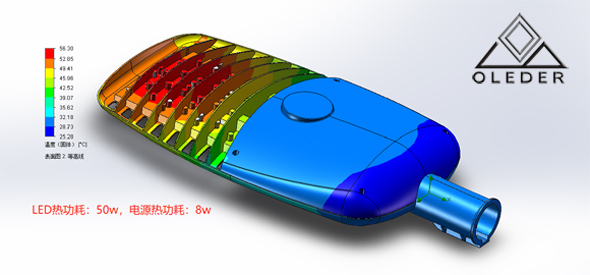
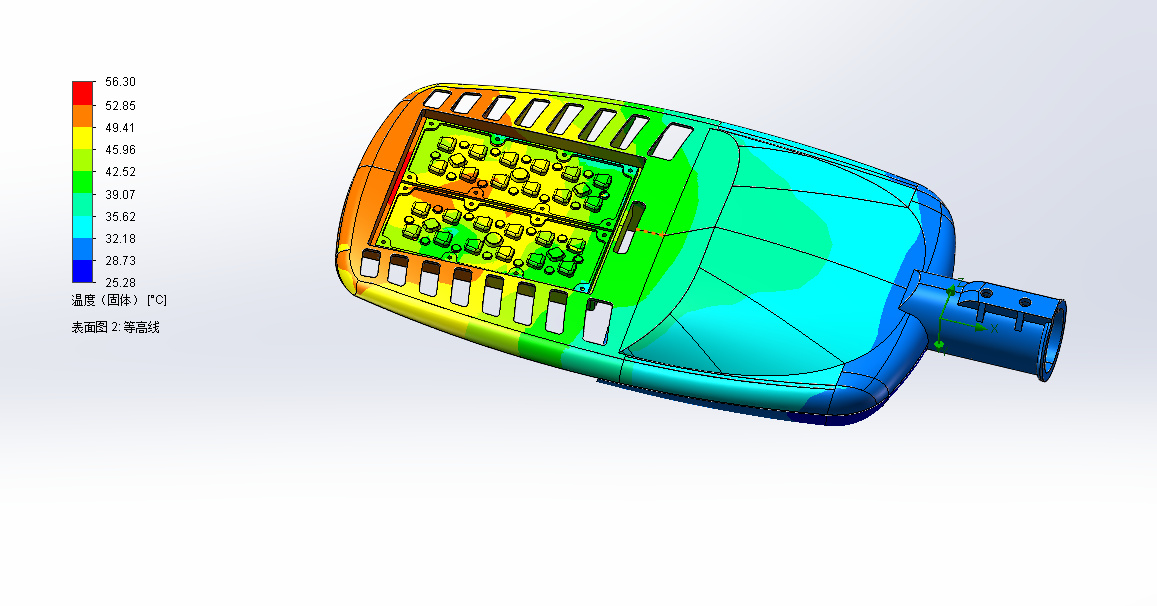
LED lifetime isn't only about the LED chip.
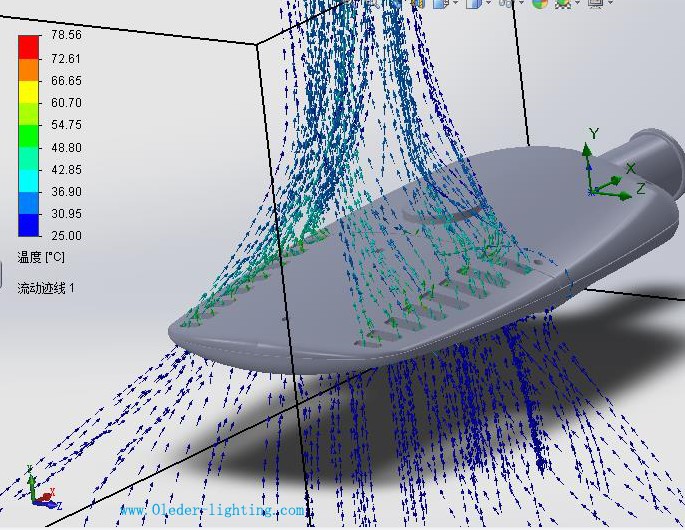
Temperature is one of the critical variables affecting LED lumen maintenance.
Higher LED operating temperatures can accelerate lumen depreciation and can also affect other components.
This is why professional LED lighting manufacturers pay attention to:
Thermal conductivity
PCB design
LED operating current
Driver efficiency
Ambient temperature
Housing design
Thermal interface materials
For example, a well-designed aluminum LED housing can help transfer heat away from the LED source.
This is particularly important for LED street lights, flood lights, high bays and other high-power luminaires.
9. Don't Confuse LED Lifetime With Driver Lifetime
This is one of the biggest mistakes when comparing LED lighting products.
Suppose a manufacturer states:
LED lifetime: 100,000 hours
This does not automatically mean:
Complete luminaire lifetime: 100,000 hours
The driver may fail earlier.
Other possible failure mechanisms include:
Electrolytic capacitor aging
Surge damage
Driver component failure
Moisture ingress
Thermal stress
Connector failure
Optical degradation
Mechanical failure
IES therefore cautions that lumen-maintenance life should not be the sole metric used to determine solid-state luminaire lifetime.
For practical product evaluation, buyers should look at LED source data + luminaire testing + driver reliability + thermal design + environmental protection.
10. What Should B2B Buyers Ask LED Manufacturers?
If you are a distributor, contractor, lighting designer, or procurement manager, don't simply ask:
"How many hours is the LED lifetime?"
Ask for the supporting information.
Recommended questions
1. Which LED brand and model are used?
Ask for the exact LED package/model rather than only "high-quality LED chips."
2. Is there LM-80 test data?
Check:
Test duration
LED model
Drive current
Temperature
Sample quantity
3. Is the lifetime projection based on TM-21?
If yes, check whether the projection follows the applicable extrapolation limits.
4. Is there LM-84 or luminaire-level testing?
This provides additional information about the complete lamp/luminaire.
5. Is TM-28 used for the luminaire projection?
For complete LED products, this can provide more relevant lumen-maintenance information than looking only at the LED component.
6. What is the driver's expected lifetime?
An excellent LED package cannot compensate for an unreliable driver.
7. What is the operating temperature?
Ask for thermal test data where appropriate.
11. How to Read a 100,000-Hour LED Claim
Be careful when you see:
100,000 Hours LED Lifetime
Ask what the number actually represents.
It could refer to:
LED component lifetime
L70 projection
A manufacturer's internal estimate
A complete luminaire reliability target
A marketing claim
These are not necessarily equivalent.
A more useful specification would look something like:
L70 > XX,XXX hours at specified operating conditions, based on applicable LM-80/TM-21 data
or, where appropriate, a luminaire-level projection based on applicable TM-28 procedures and test data.
The exact reported value should always be interpreted together with its test conditions and calculation method.
12. TM-21 vs TM-28: Which One Is Better?
The answer is:
Neither is simply "better." They answer different questions.
If you want to evaluate the LED source:
Look at:
LM-80 + TM-21
If you want to evaluate an LED lamp or luminaire:
Look for:
LM-84 + TM-28, where applicable, together with other reliability information.
For a complete lighting product:
Look beyond lumen maintenance.
A robust evaluation should consider:
LED + driver + thermal design + optics + housing + environmental protection + electrical reliability + actual application conditions
13. What This Means for OLEDER LED Lighting
For a lighting manufacturer, lifetime should be considered as part of the complete luminaire design, rather than simply selecting an LED chip with a large lifetime number.
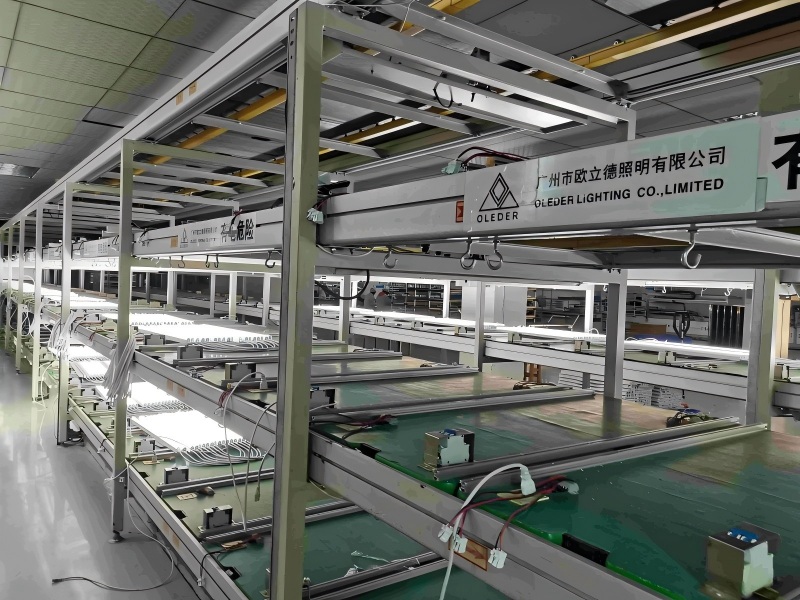
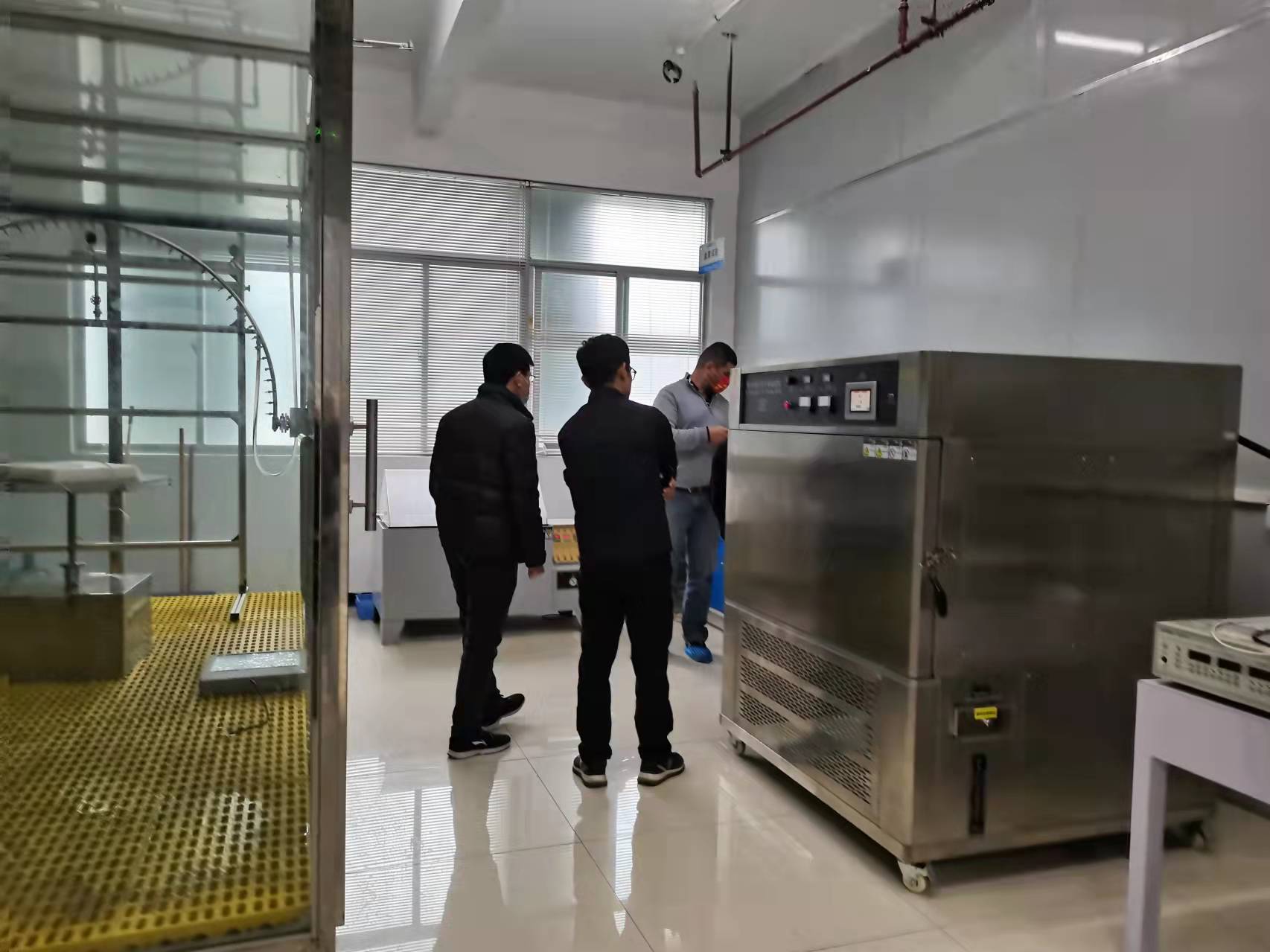
OLEDER describes its lighting development and manufacturing capabilities as including heat-sink design, heat-dissipation analysis, lighting simulation, a lighting test lab, aging testing, and multiple production lines. (Oleder Lighting)
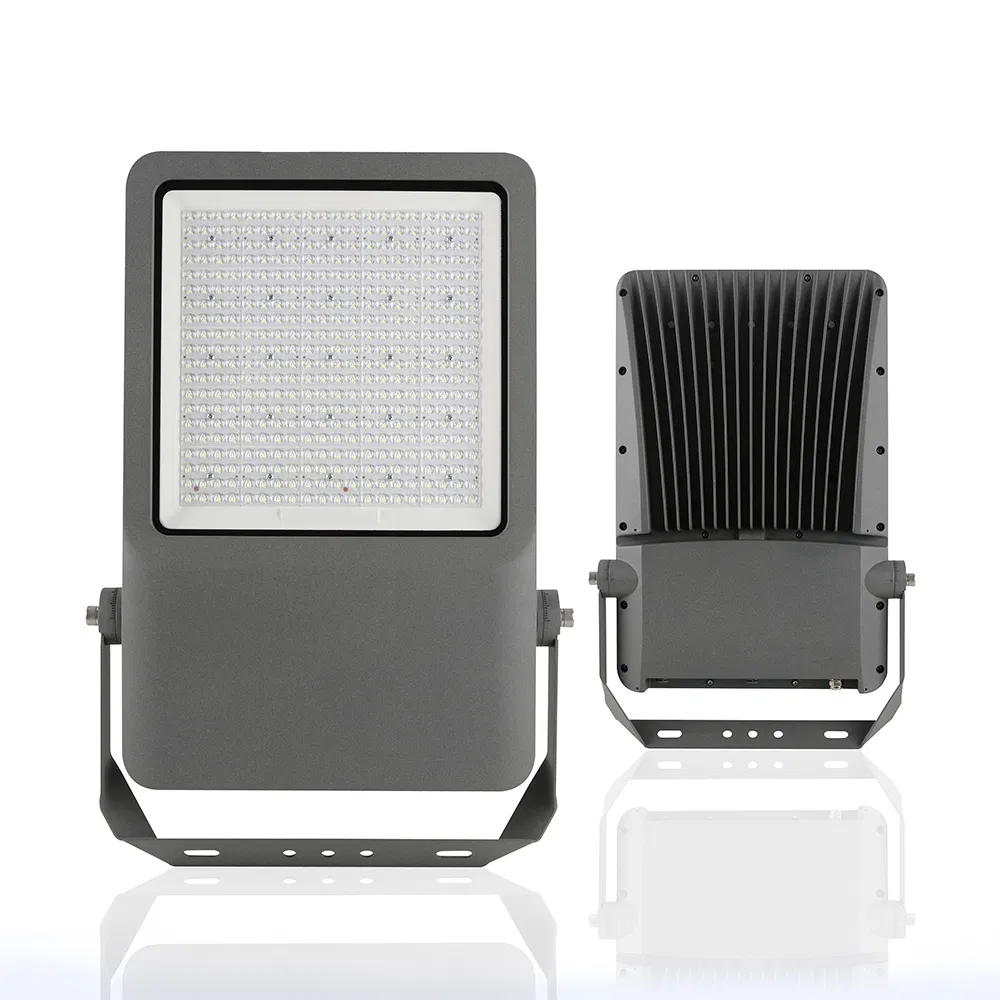
Its product portfolio includes LED street lights, flood lights, high bay lights, solar lighting, magnetic track lights and smart lighting controls. (Oleder Lighting)
For buyers evaluating an OLEDER product, the relevant question should therefore not simply be "Does the LED last 100,000 hours?" but rather:
How was the claimed lumen-maintenance life calculated, under what conditions, and how does the complete luminaire manage heat, power and environmental stress?
You can explore OLEDER's lighting products here:
For additional background on LED lumen depreciation, OLEDER also discusses L70 and LED brightness degradation in its LED lighting FAQ.
14. Quick Buyer Checklist
Before accepting an LED lifetime claim, check these 8 points:
☑ LED manufacturer and exact LED model
☑ LM-80 test report
☑ LM-80 test duration
☑ TM-21 projection calculation
☑ Applicable TM-21 extrapolation limit
☑ LM-84 / TM-28 data where applicable
☑ Driver lifetime and reliability
☑ Thermal and environmental performance of the complete luminaire
The key takeaway
TM-21 is primarily about projecting the lumen maintenance of LED light sources from LM-80 data. TM-28 extends the projection approach to LED lamps and luminaires, using luminaire/lamp data and, where applicable, combined source data.
Most importantly, a TM-21 LED lifetime claim should not automatically be interpreted as the lifetime of the complete lighting fixture. The IES explicitly makes this distinction.
Author introduction

Author
Hey Guys ,My name is Royce O'young, the sales manager of Oleder Lighting. I have been in the LED lights industry for more than 16 years,have some experience in lighting design,
track light system configuration, and bidding technology support,and architecture inner decorating lighting advice.
If you are looking for assistance from industry professionals to help guiding you in your lighting process,feel free to reach out to our talented Oleder team .
Email: r.oyoung@oleder-lighting.com | Wechat/WhatsApp: +86159 2057 0517.
Recommended Products

CATEGORIES
CONTACT US
Contact: Royce O'young
Phone: 15920570517
Tel: 0086-20-37716973
Email: r.oyoung@oleder-lighting.com
Add: Room 335,#1 Xianke 1st Rd, Honglitronic Group,Huadu ,510890, Guangzhou,P.R.C.
 Send Email
 Royce O'young
 Sales
Sales WhatsApp